From Plate to Plate
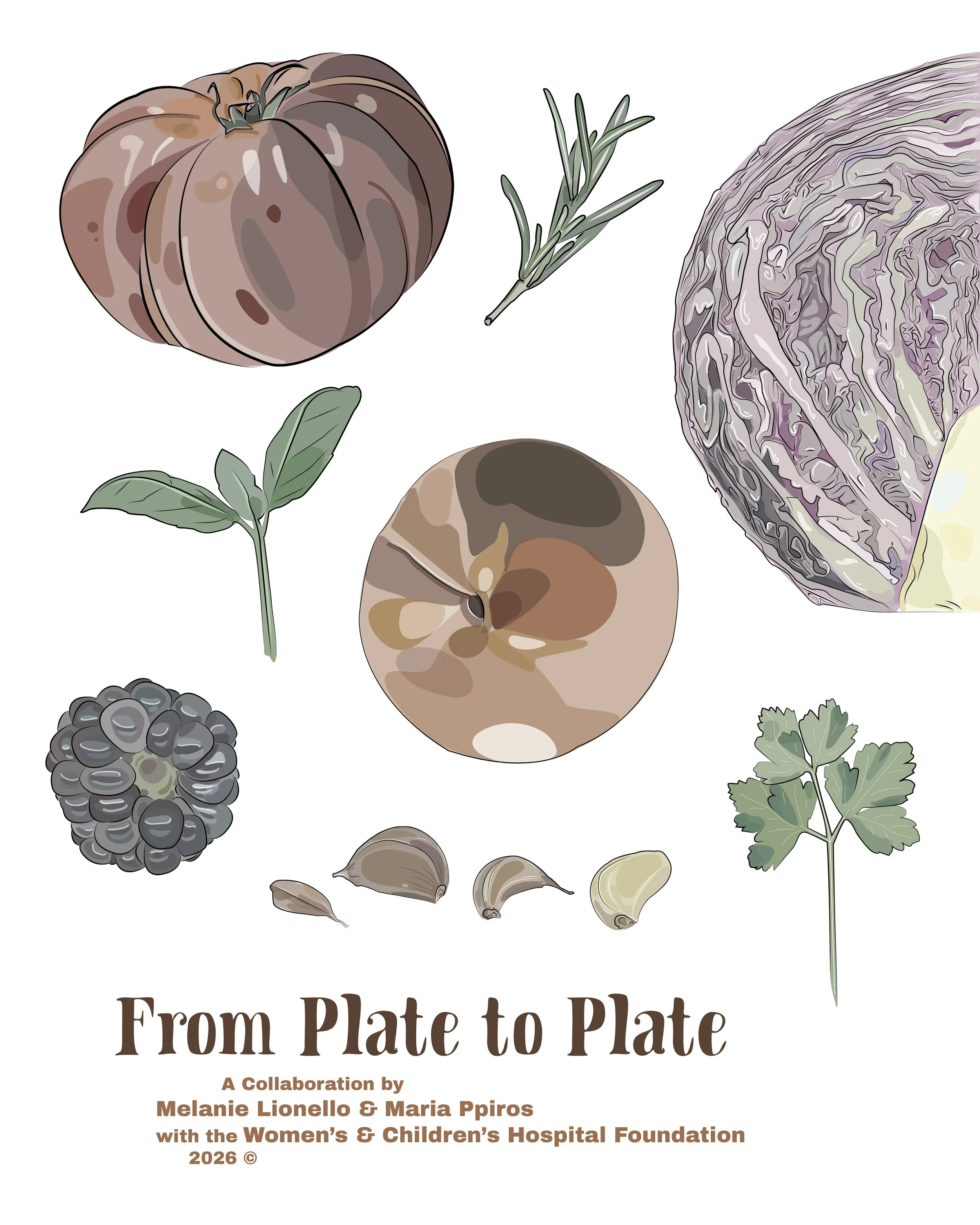
Extract from project From Plate to Plate, Melanie and Maria 2026 ©
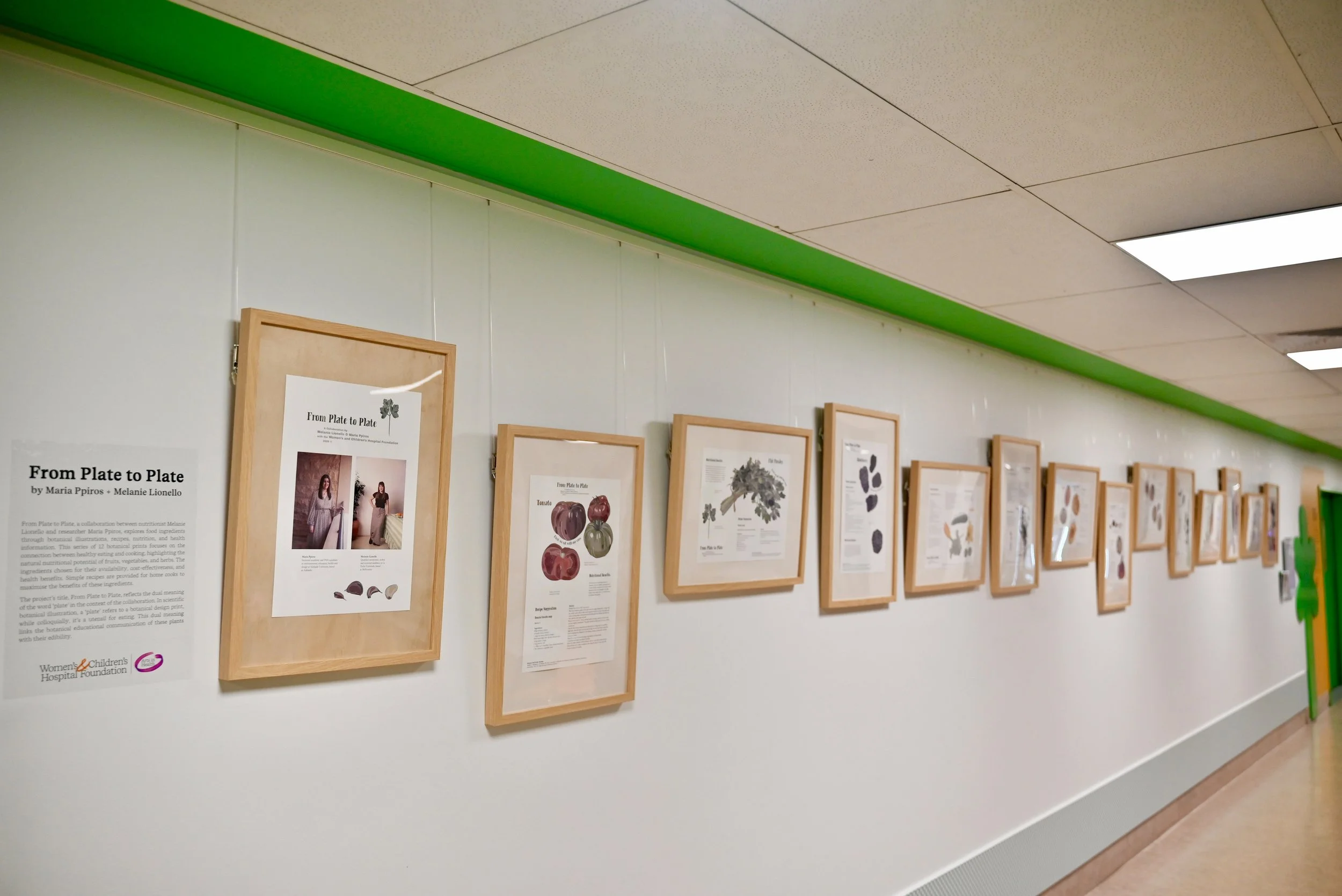
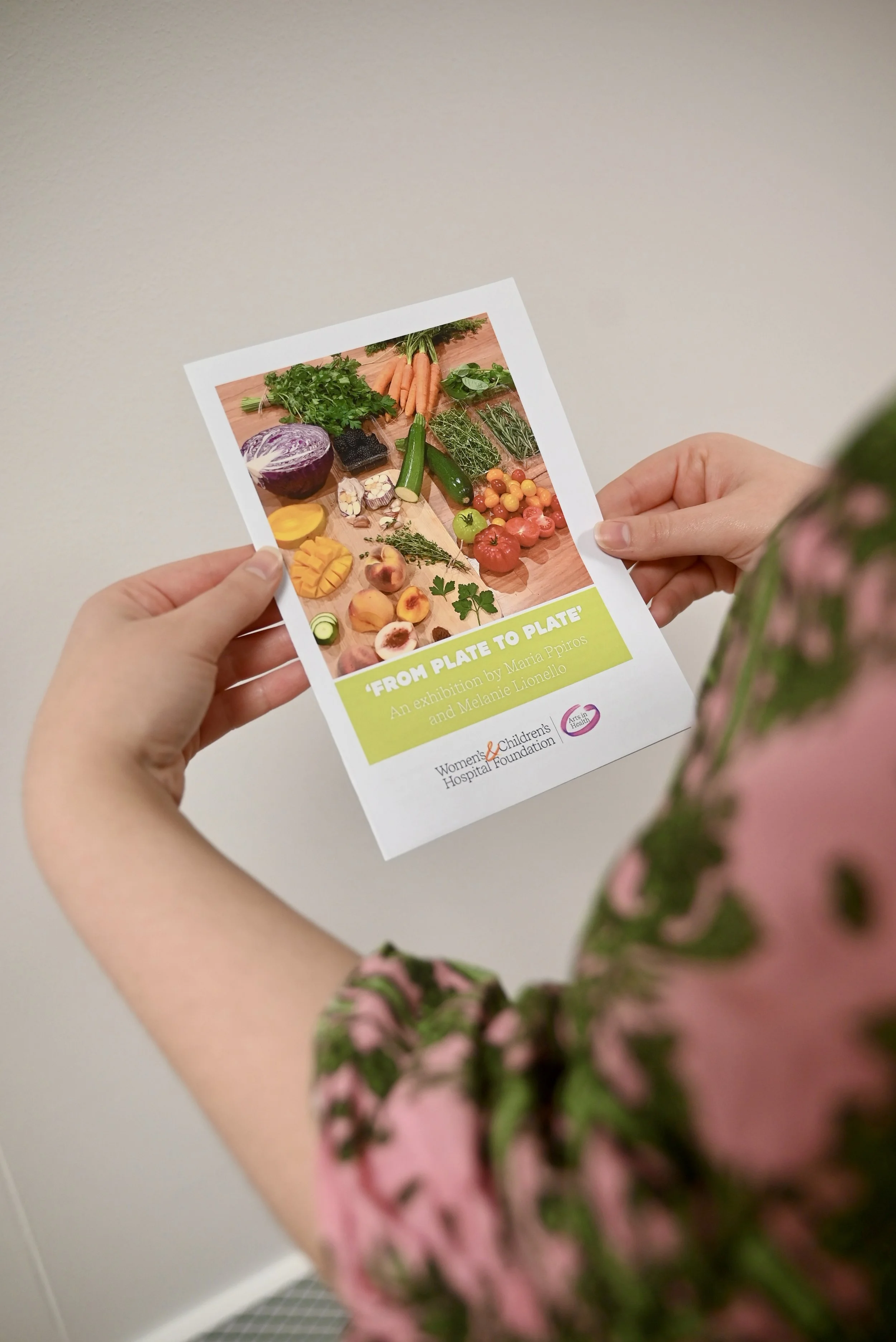
A collaboration between nutritionist and author Melanie Lionello and researcher and educator Maria Ppiros with the Women’s and Children’s Hospital Foundation.
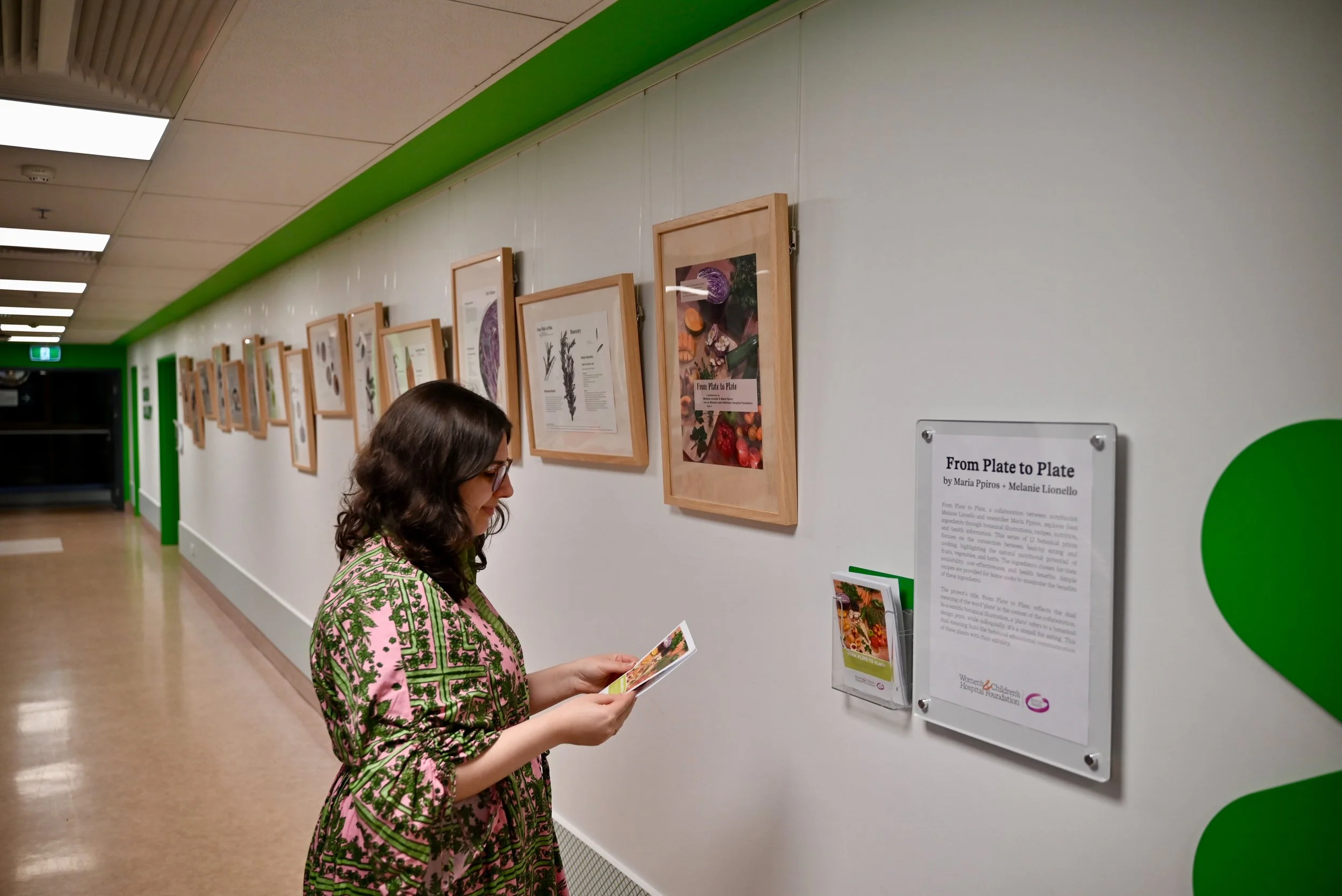
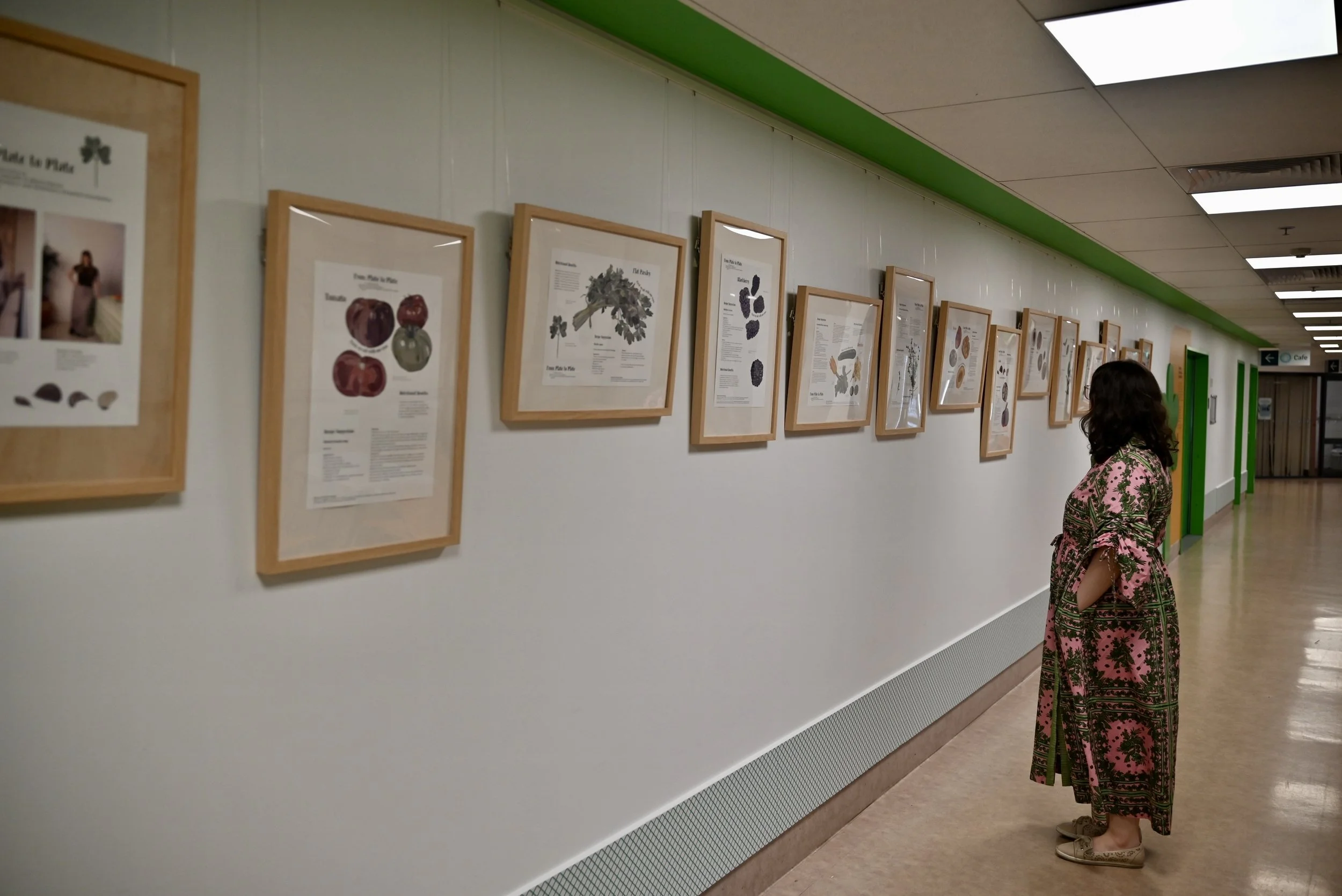
Exhibition: 1st June - 5th October 2026
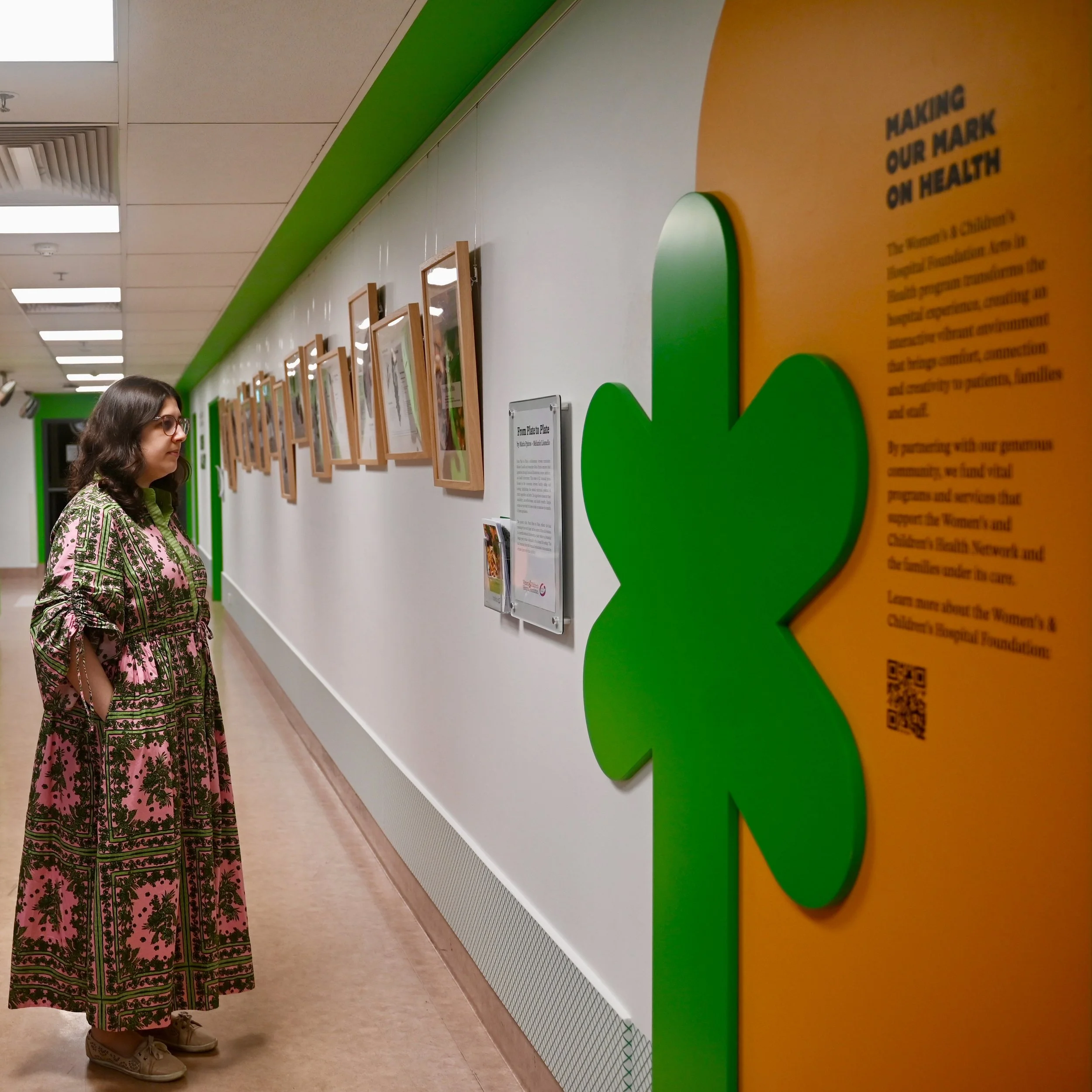
Location: Women’s and Children’s Hospital, Green Gallery, Level 2 (outside the Hospital Café)
*exhibition relocated to the Orange Gallery from September, located at the Women’s and Children’s Hospital, Orange Gallery, Level 1, along the Samuel Way walkway
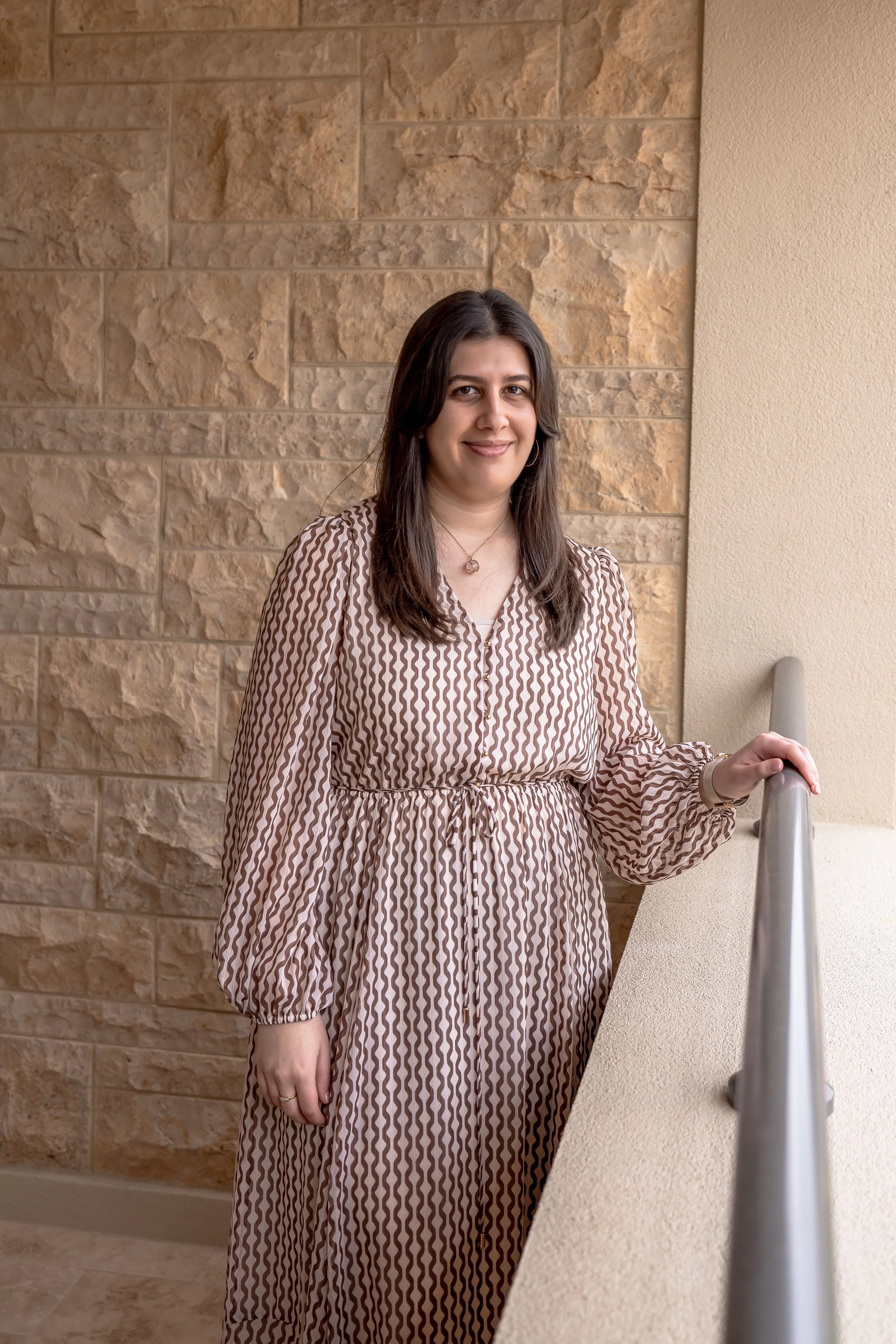
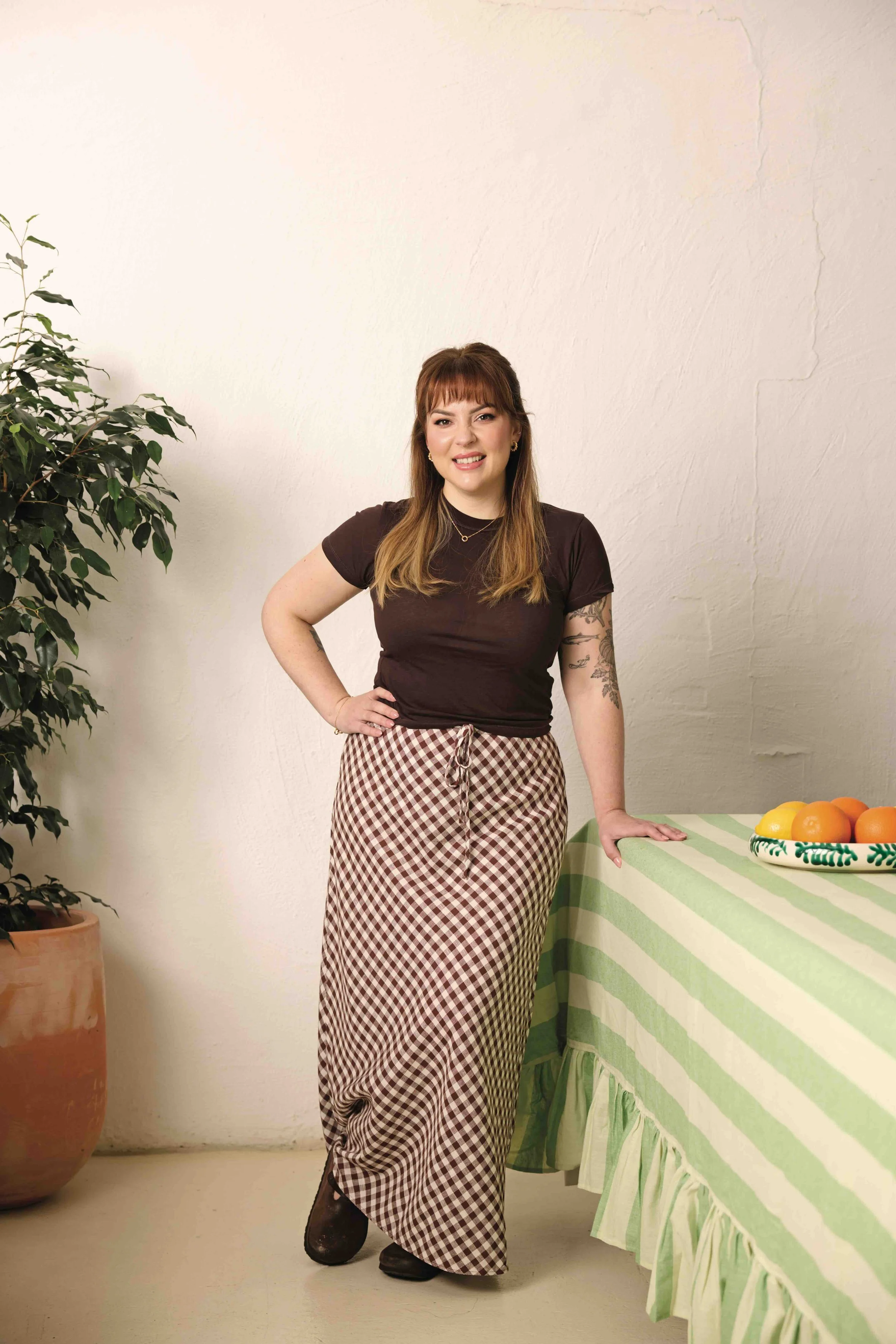
Left: Maria, Right: Melanie. Photograph extracts from project From Plate to Plate, Melanie and Maria 2026 ©
Learn more about the collaborators Maria worked with on From Plate to Plate at the links below:
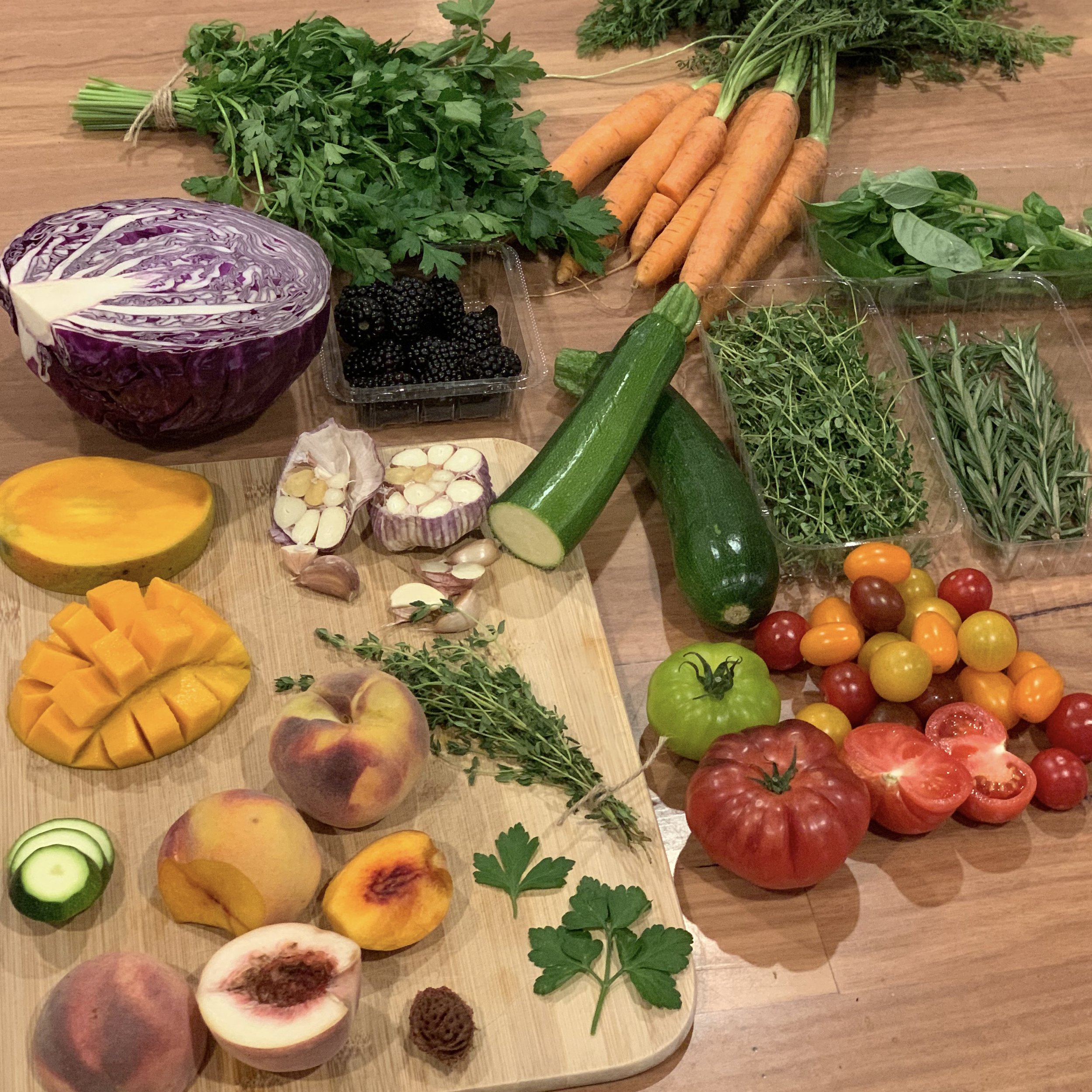
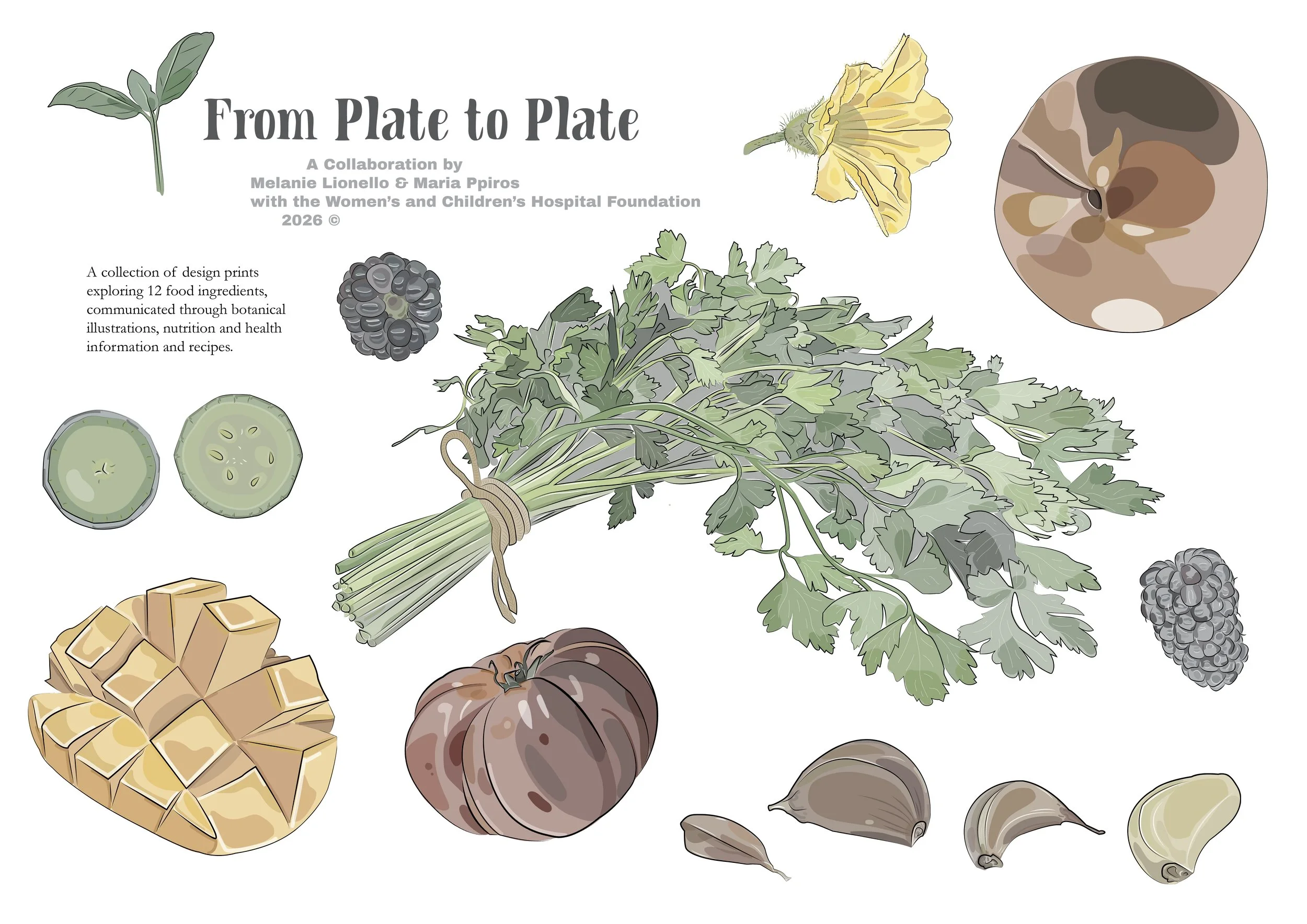
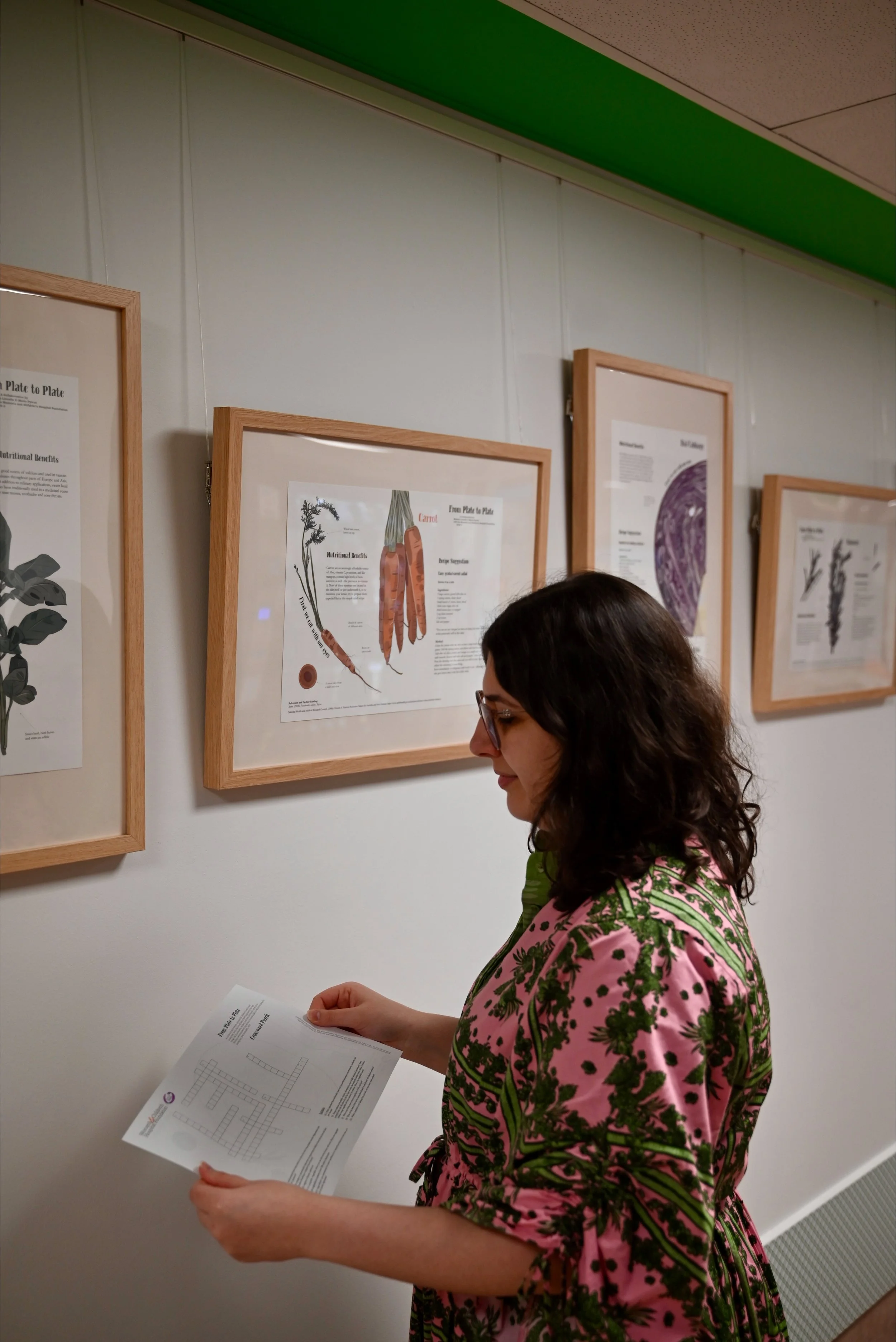
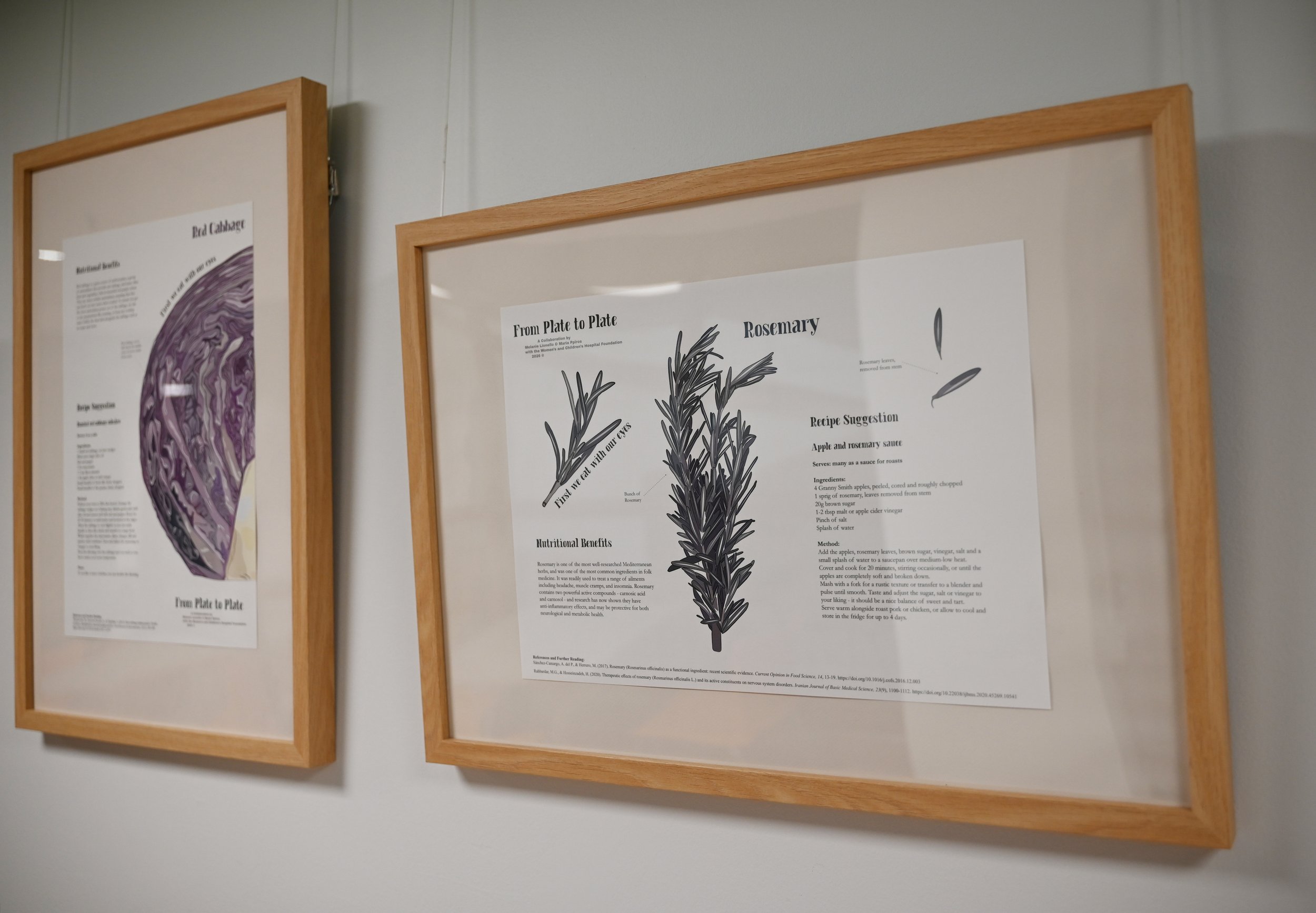
Extracts from project From Plate to Plate, Melanie and Maria 2026 ©
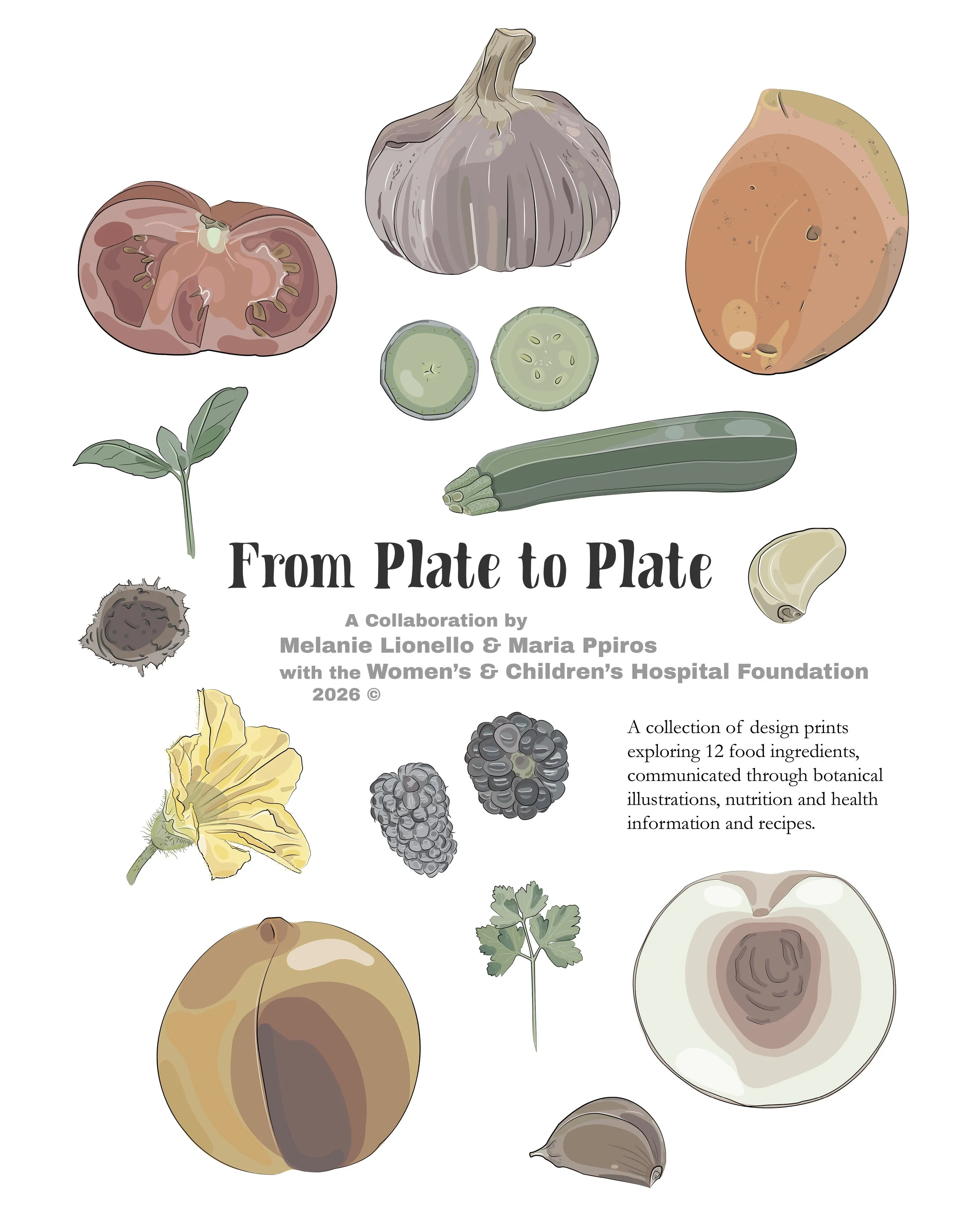
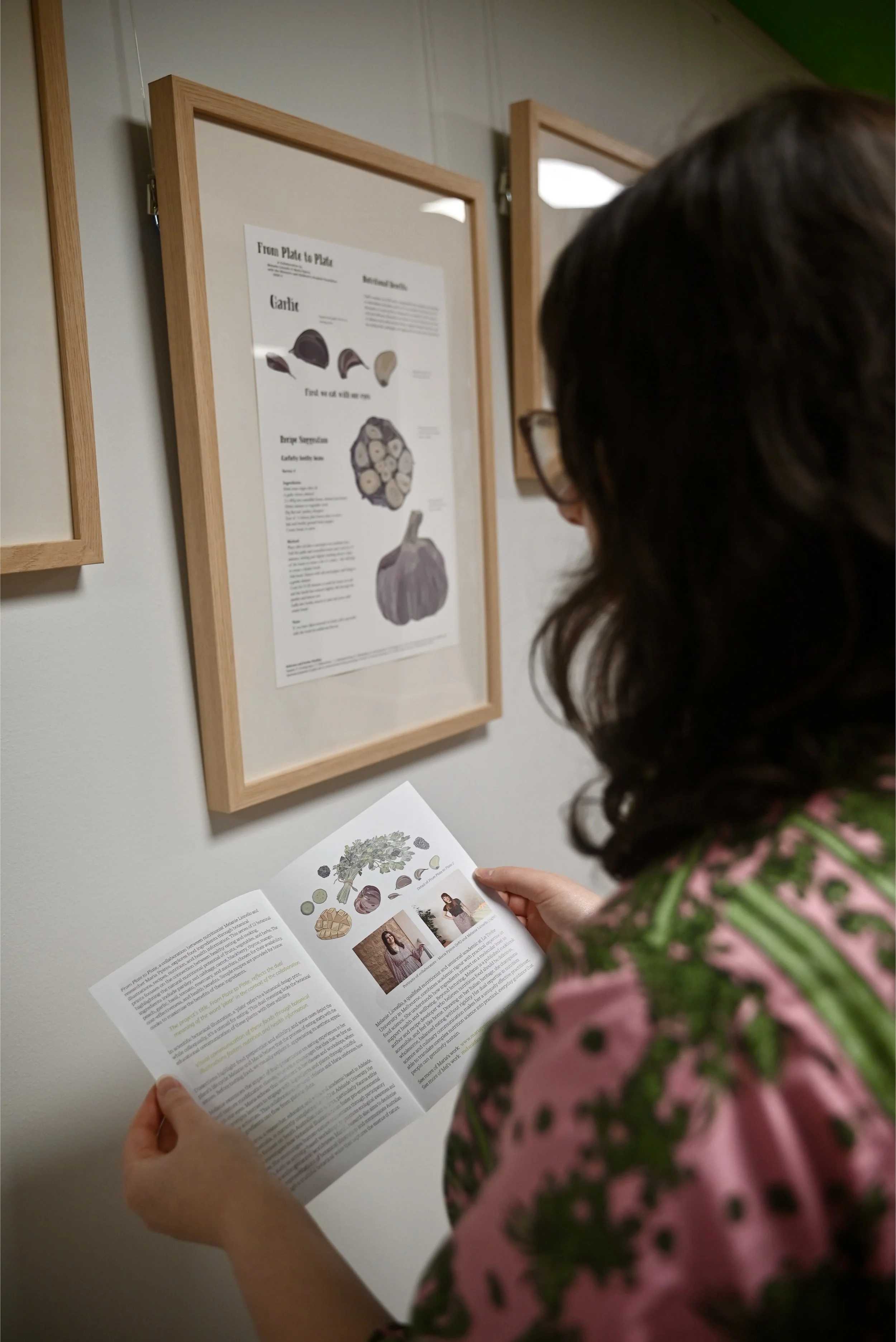
Extract from project From Plate to Plate, Melanie and Maria 2026 ©
Project Statement
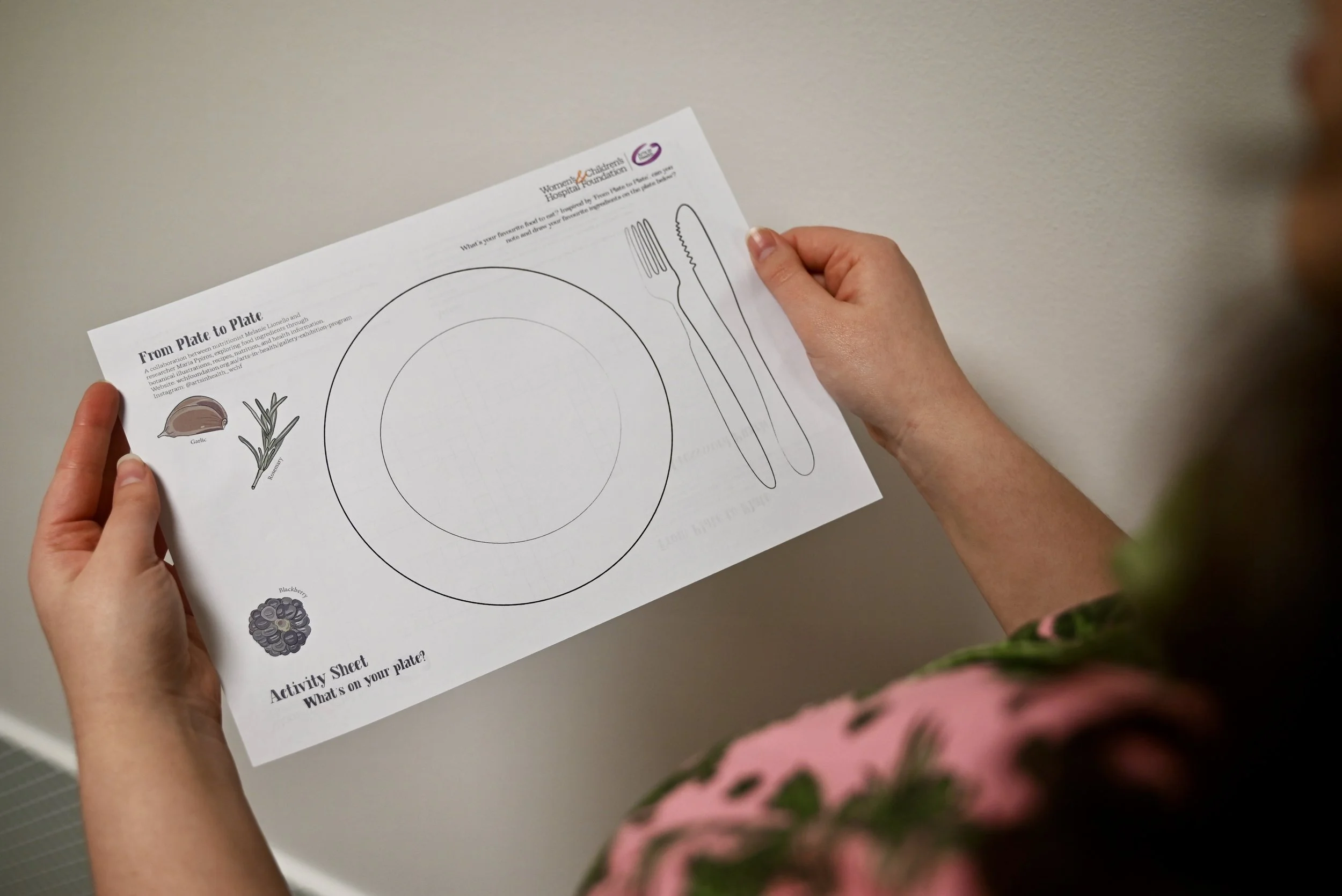
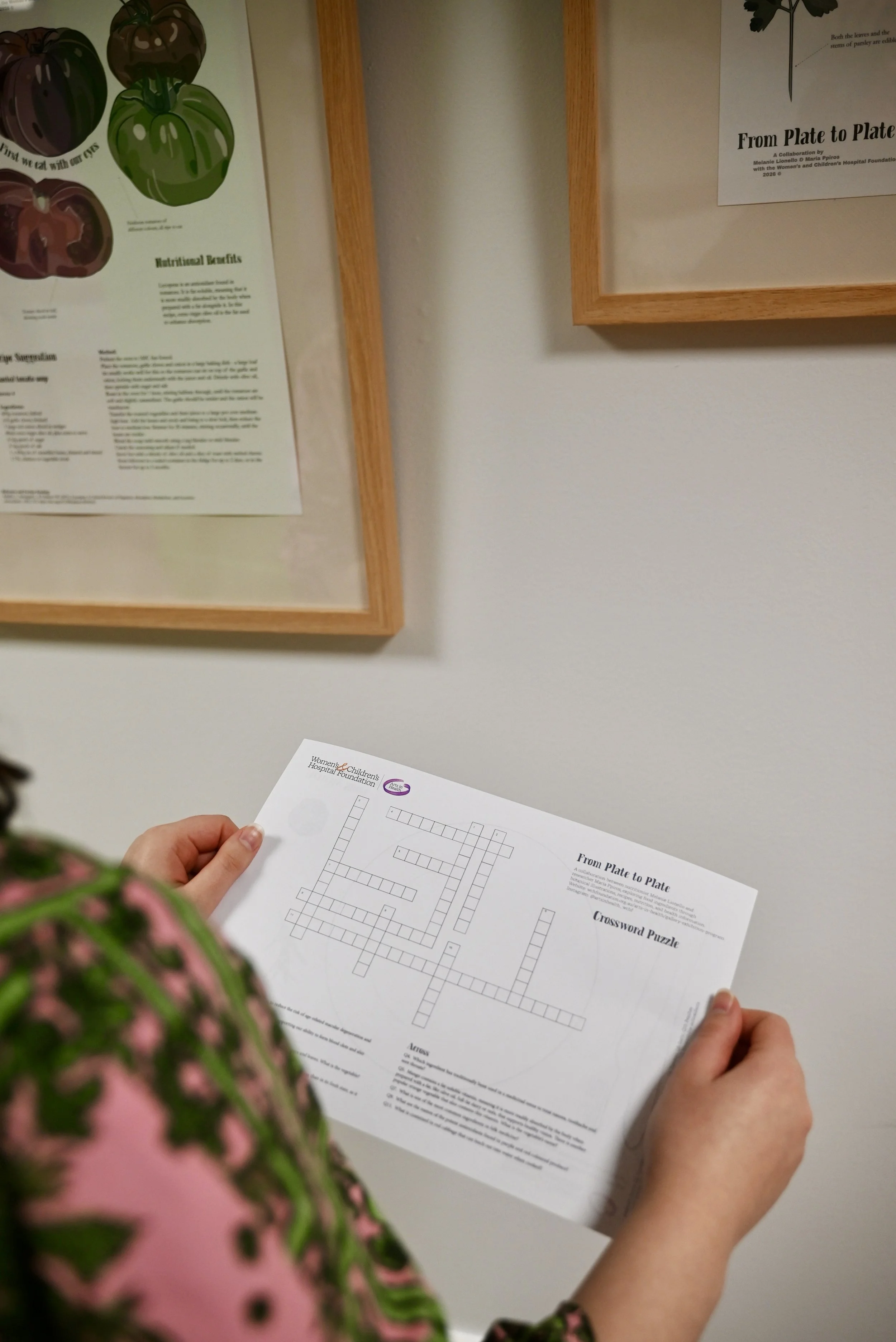
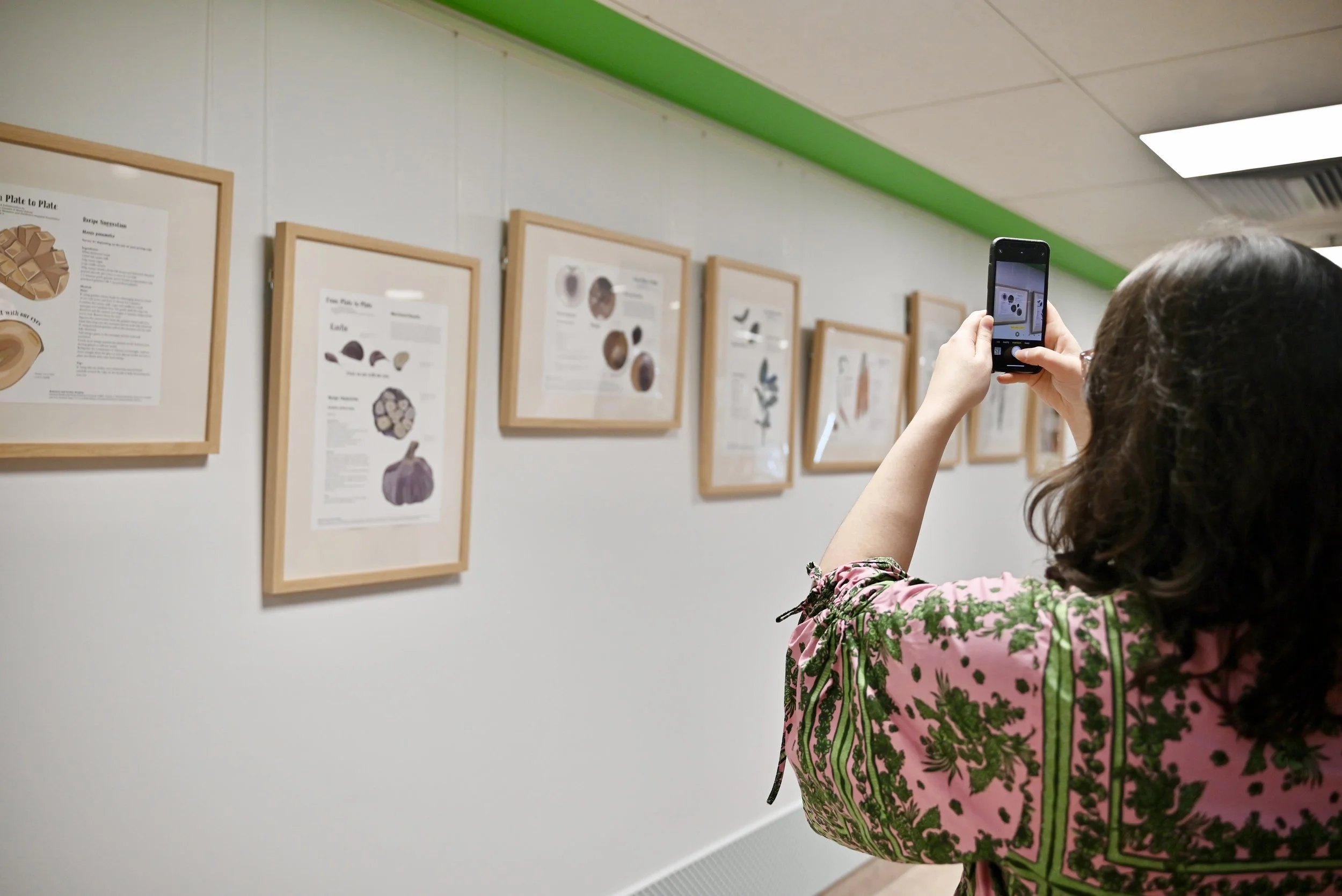
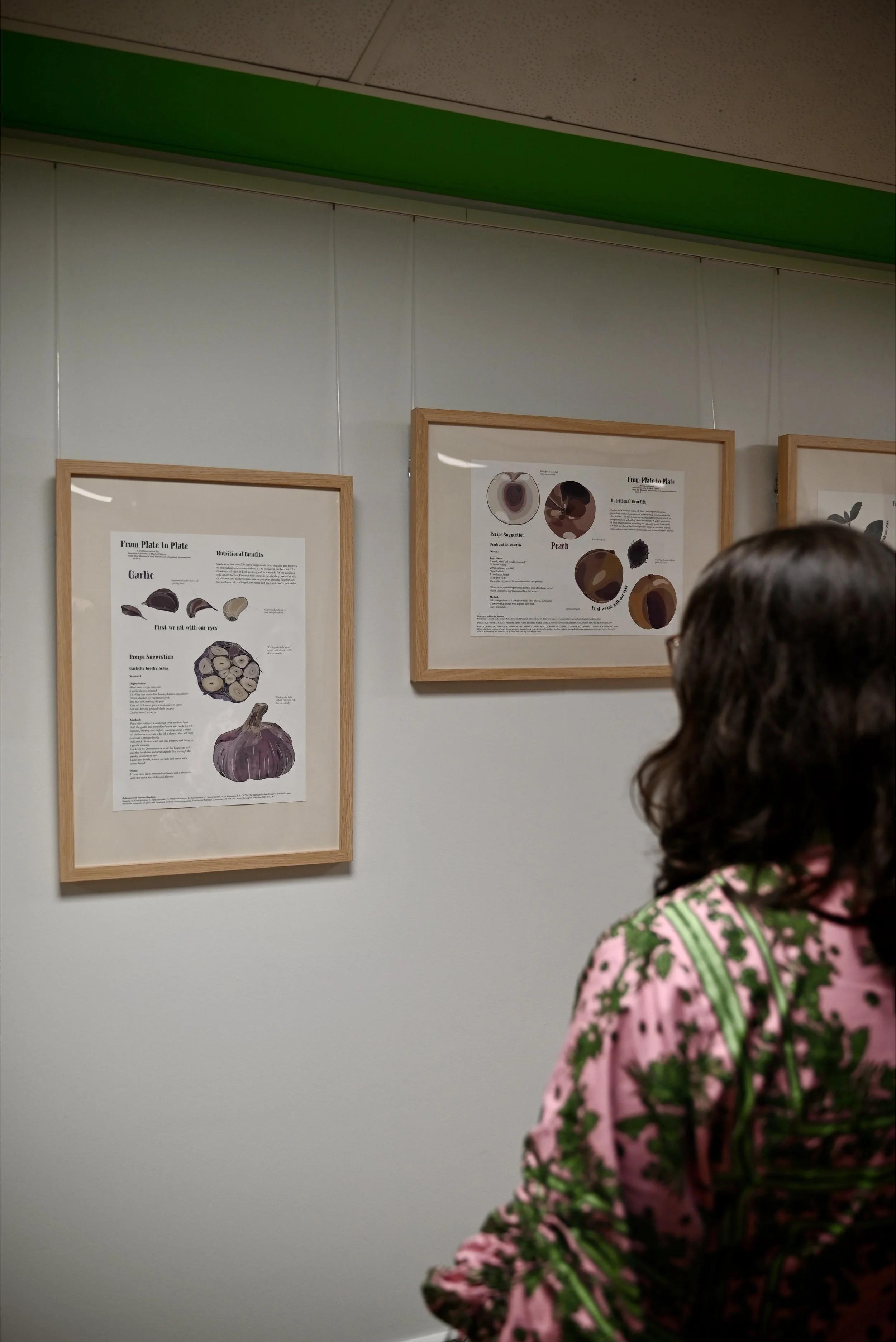
From Plate to Plate is a collaboration between nutritionist and author Melanie Lionello and researcher and educator Maria Ppiros that explores a collection of food ingredients, communicated through botanical illustration notations, recipes, nutrition and health information and cooking tips. This series of 12 botanically illustrated design prints and two activity sheets focuses on the connection between healthy eating and cooking to convey the natural nutritional potential of fruits, vegetables and herbs. The ingredients featured in this project comprise parsley, red cabbage, carrot, blackberry, thyme, mango, peach, garlic, basil, tomato, rosemary and zucchini – ingredients all intentionally selected for their availability, cost efficiency and beneficial health properties. These ingredients are supported by simple recipes for the home cook, with suggestions on how to gain the most benefit out of these 12 key ingredients.
The project’s title, From Plate to Plate, symbolises the dual meaning of the word ‘plate’ and its contextual positioning within the collaboration. In traditional scientific botanical illustration practice, a ‘plate’ refers to a botanical design print, while colloquially, a ‘plate’ is a physical tool and utensil to eat from. This double meaning links the botanical educational communication of these plants with their edibility as food.
In this collaboration, nutrition and health information is fostered by visual communication of these foods through botanical illustrations. This includes the use of dissections to segment particular ingredient parts to highlight food preparation and edibility, with some cases also depicting the life cycle of the plant.
Beyond the nourishing value of these foods, both Mel and Maria believe that the process of eating starts with the ignition of our senses. Before we experience the taste of food, we first explore the food with our eyes through visual sight, consuming the food through aesthetic appeal.
As presentation of food alters our overall eating experience, Mel examines this concept with her students in one of her food texture modification classes, where she encourages the notion that ‘first we eat with our eyes’. This sentiment is also echoed in classes and workshops Maria conducts, where she prompts learners to engage with ingredients and plants through mindful sensory activities involving the use of all five senses. With both Mel and Maria working in food communication and education, this collaboration allows their shared interests to merge in a celebration of how these ingredients can flow from plate to plate.
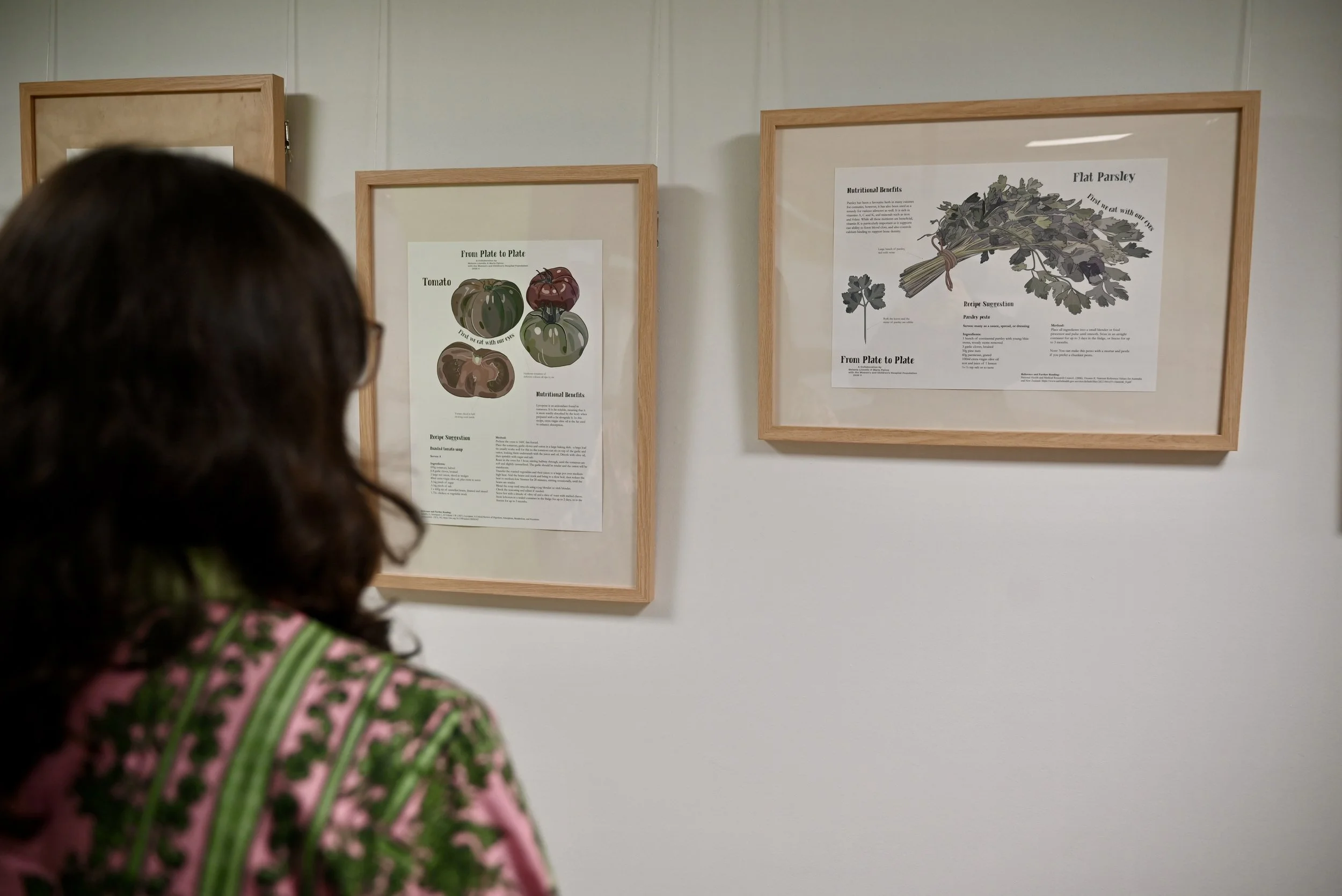
‘Plate 1: Tomato’
extract from the From Plate to Plate collection, featuring a roasted tomato soup recipe written by Melanie Lionello
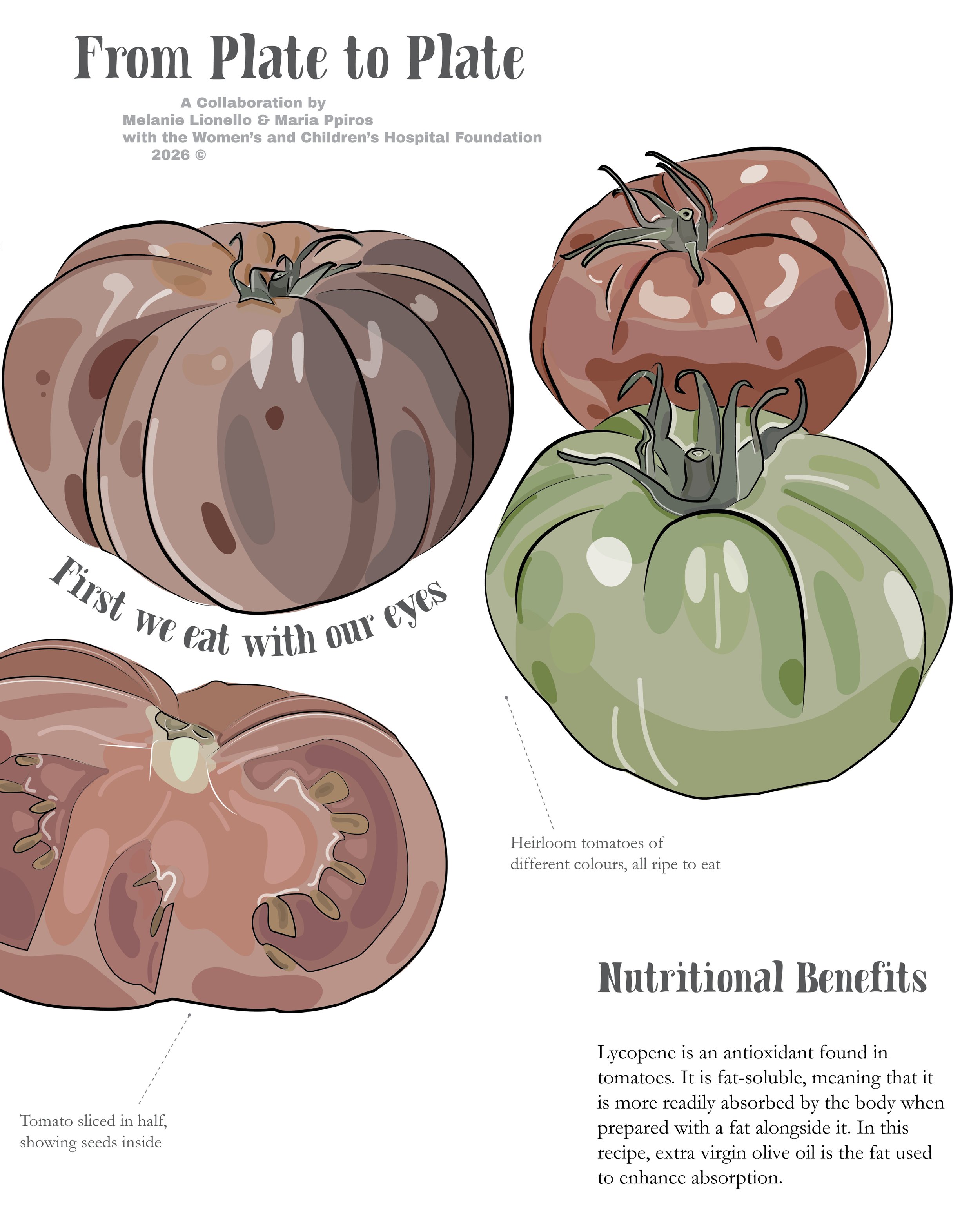
Close up of ‘Plate 1: Tomato’, extract from project From Plate to Plate, Melanie and Maria 2026 ©
Roasted tomato soup
Serves: 4
Ingredients:
600g tomatoes, halved
6-8 garlic cloves, bruised
1 large red onion, sliced in wedges
80ml extra-virgin olive oil, plus extra to serve
A big pinch of sugar
A big pinch of salt
1 x 400g tin of cannellini beans, drained and rinsed
1.75L chicken or vegetable stock
Method:
Preheat the oven to 160C fan-forced. Place the tomatoes, garlic cloves and onion in a large baking dish - a large loaf tin usually works well for this so the tomatoes can sit on top of the garlic and onion, locking them underneath with the juices and oil. Drizzle with olive oil, then sprinkle with sugar and salt. Roast in the oven for 1 hour, stirring halfway through, until the tomatoes are soft and slightly caramelised. The garlic should be tender and the onion will be translucent. Transfer the roasted vegetables and their juices to a large pot over medium-high heat. Add the beans and stock and bring to a slow boil, then reduce the heat to medium-low. Simmer for 20 minutes, stirring occasionally, until the beans are tender. Blend the soup until smooth using a jug blender or stick blender. Check the seasoning and adjust if needed. Serve hot with a drizzle of olive oil and a slice of toast with melted cheese. Store leftovers in a sealed container in the fridge for up to 2 days, or in the freezer for up to 3 months.